Telehealth or the Exam Room? A Physician-Guided Decision Framework for Every Symptom
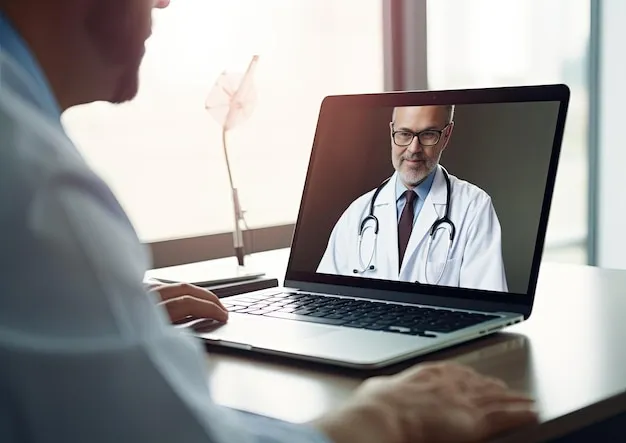
Photo: doctor conducting telehealth video consultation with patient on laptop, via img.freepik.com
The expansion of telehealth over the past several years has been one of the more significant shifts in how Americans access medical care. It has made certain types of consultations faster, cheaper, and more accessible—particularly for patients in rural areas, those with limited mobility, or individuals managing chronic conditions that require frequent but routine check-ins.
It has also, in some cases, created a false sense of clinical equivalence. A video appointment and an in-person examination are not interchangeable. The difference matters, and the stakes of choosing incorrectly are not trivial.
At TrueMedo, our physicians operate at the intersection of digital and traditional care every day. This guide reflects their honest, experience-grounded perspective on when virtual medicine genuinely serves patients well—and when it does not.
The Fundamental Constraint of Remote Medicine
Before walking through specific symptom categories, it is worth naming the core limitation that shapes every other consideration. Physical examination is not a formality. Auscultating the lungs, palpating the abdomen, assessing lymph node size, measuring blood pressure in both arms, evaluating gait and coordination—these are diagnostic acts that cannot be replicated through a screen, regardless of camera resolution or platform sophistication.
"There's a tendency to underestimate what a physical exam actually tells us," says one internal medicine physician who consults through TrueMedo. "When I see a patient in person, I'm gathering information continuously—the way they move, whether they look uncomfortable, skin color, how they're breathing. None of that comes through on a video call."
This does not mean telehealth is inadequate. It means telehealth is appropriate for a defined subset of clinical encounters, and recognizing that boundary is a prerequisite for using it responsibly.
When Telehealth Works Well
Established Conditions Under Stable Management
If you have been diagnosed with hypertension, type 2 diabetes, hypothyroidism, or another chronic condition, and your symptoms are stable and your lab values are within expected ranges, a virtual follow-up is often clinically appropriate. The physician already has your history. The conversation is primarily about medication adherence, lifestyle factors, and interpreting recent test results—none of which require physical presence.
The same logic applies to medication refills for conditions that have been well-characterized and are not showing signs of change. A patient who has been managing asthma for a decade and needs a refill of a maintenance inhaler does not necessarily need to take a half-day off work for an in-person appointment.
Mental Health and Behavioral Health Consultations
Research has consistently shown that telepsychiatry and teletherapy produce outcomes comparable to in-person care for a broad range of conditions, including depression, anxiety disorders, and PTSD. The therapeutic relationship is largely preserved through video, and the reduced friction of accessing care remotely has been shown to improve treatment engagement—particularly among patients who face stigma-related barriers to seeking help in person.
Mild, Acute, Clearly Defined Symptoms
A sore throat without difficulty swallowing or breathing, a urinary tract infection in a patient with a straightforward prior history, a mild rash in a location that can be clearly photographed—these are encounters where a licensed physician can make a reasonable clinical assessment remotely, order appropriate tests if needed, and prescribe treatment when indicated.
Post-Operative Check-Ins and Care Coordination
Following a procedure with an uncomplicated recovery, virtual check-ins allow physicians to assess healing through patient-reported symptoms and photographs, address concerns promptly, and avoid unnecessary travel for patients who may still be recovering. This is an area where telehealth adds genuine value without meaningful clinical compromise.
When You Need to Be in an Exam Room
Chest Pain, Shortness of Breath, or Neurological Symptoms
This is not a gray area. Chest pain, difficulty breathing, sudden severe headache, facial drooping, arm weakness, slurred speech, sudden vision changes, or loss of consciousness are emergency presentations. The appropriate response is 911 or the nearest emergency department—not a telehealth queue.
Physicians on TrueMedo are unambiguous on this point. "If someone messages me describing chest tightness and shortness of breath, I'm not scheduling a video call," says one emergency medicine consultant affiliated with the platform. "I'm directing them to emergency services immediately."
Abdominal Pain of Unknown Origin
Abdominal pain is among the most diagnostically complex symptom categories in medicine. The differential diagnosis is vast, and distinguishing between conditions that are benign and self-limiting and those that are surgical emergencies requires physical examination—palpation, assessment of rebound tenderness, evaluation of bowel sounds. A physician cannot reliably assess these findings through a screen.
Pediatric Illness With Fever in Young Children
Infants and young children under the age of two or three with significant fever warrant in-person evaluation in most circumstances. Children in this age group can deteriorate rapidly, and the clinical signs that indicate serious illness—such as meningeal irritation, respiratory distress, or signs of sepsis—require direct physical assessment.
New, Unexplained, or Worsening Symptoms
If you are experiencing symptoms that are new to you, that you cannot clearly characterize, or that have been present and worsening over time without a clear explanation, an in-person evaluation is the appropriate starting point. Telehealth is well suited to managing the known; it is less suited to investigating the unknown.
Any Situation Requiring Diagnostic Testing You Cannot Perform at Home
If your clinical picture requires a physical examination, blood draw, imaging, cultures, or any other in-office diagnostic procedure, a telehealth visit cannot substitute for in-person care. It may, however, serve as a useful preliminary step—helping a physician determine what testing is warranted before you arrive at the clinic.
A Practical Decision Framework
The following questions can help guide your choice before scheduling any appointment:
Is this an emergency? If there is any possibility of a life-threatening condition, call 911 or go to the emergency room. Do not schedule any appointment.
Has this condition been previously diagnosed by a physician? If yes, and your symptoms are consistent with prior presentations, telehealth may be appropriate. If no, in-person evaluation is generally preferable.
Does accurate diagnosis require physical examination or in-office testing? If yes, in-person care is necessary.
Is your concern primarily about medication management or care coordination? If yes, telehealth is often sufficient.
Are you uncertain? Call the clinic or use a platform like TrueMedo to speak with a licensed physician who can help triage your situation before you commit to a care pathway.
The Honest Role of a Platform Like TrueMedo
Telemedicine platforms that prioritize patient volume over patient outcomes do a disservice to both. At TrueMedo, the standard is different: our licensed physicians will tell you when a virtual consultation is appropriate, and they will tell you—directly—when it is not.
Convenience is a legitimate value in healthcare. It reduces barriers, improves access, and increases the likelihood that patients engage with care at all. But convenience should never displace clinical judgment.
The goal is not to maximize telehealth utilization. The goal is to match every patient to the right care, in the right setting, at the right time. That is a distinction worth making clearly—and acting on consistently.