Your Medical Record Is Not Always Right: A Step-by-Step Guide to Finding and Fixing Errors
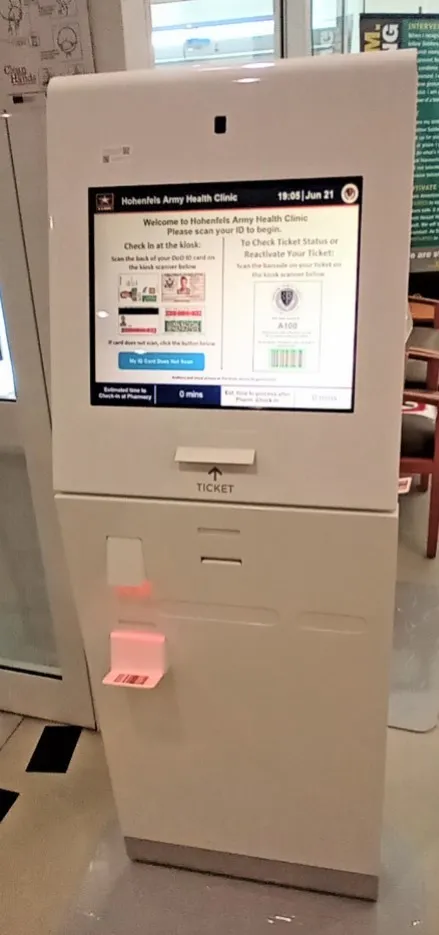
Photo: U.S. Army RHCE by Kirk Frady, Public domain, via Wikimedia Commons
Most Americans assume that their electronic health record (EHR) is an accurate, living biography of their medical history. It is not always. Studies published in peer-reviewed journals suggest that a significant proportion of patient records contain at least one clinically meaningful error—ranging from a mistyped medication dosage to a diagnosis that was never actually confirmed but somehow became a permanent fixture in a patient's chart.
These are not abstract bureaucratic problems. A coding error that labels you as a diabetic when you are not can affect the medications your physician prescribes, the specialist referrals you receive, and the premiums your insurer charges. At TrueMedo, our network of licensed physicians routinely encounters patients whose care has been complicated—sometimes seriously—by inaccurate documentation they were never told existed.
This article will show you exactly what to look for, where to look, and what to do when you find something wrong.
Why Errors Enter the Record in the First Place
Electronic health records were designed to improve care coordination. In practice, they also introduced new categories of human and systemic error. Physicians working under significant time pressure frequently use templated documentation, auto-populated fields, and copy-paste functions that carry outdated information forward from visit to visit. A note written during a 2019 hospitalization can, without deliberate correction, appear verbatim in a 2024 record.
Coding errors represent another persistent problem. Medical billing relies on a standardized system of diagnostic codes (ICD-10) and procedural codes (CPT). When a coder selects an incorrect code—sometimes because the physician's notes were ambiguous—that code becomes part of your permanent record and is transmitted to your insurer. A code for a confirmed condition rather than a suspected one, or for a more severe variant of an illness than you actually had, can follow you for years.
Test results are also misattributed more often than most patients would expect. In busy clinical environments, lab values or imaging findings have been documented under the wrong patient's name. Less dramatically but equally consequentially, results are sometimes recorded without adequate context—a borderline reading that was never acted upon can appear in your record in a way that suggests an established diagnosis.
What a Meaningful Review Actually Looks Like
You have a federally protected right to access your medical records under the Health Insurance Portability and Accountability Act (HIPAA). Most healthcare systems now provide access through patient portals, and the 21st Century Cures Act has further accelerated the timeline by which providers must make records available to you electronically.
When you sit down to review your records, do not simply skim the visit summaries. Focus on the following specific areas:
Problem lists and diagnosis sections. This is where outdated, unconfirmed, or incorrectly coded conditions most commonly persist. Look for diagnoses you do not recognize, conditions that were ruled out but never removed, and severity descriptors that do not match what your physician actually told you.
Medication lists. Reconciliation errors here are common and potentially dangerous. Look for medications you stopped taking, dosages that do not match your current prescriptions, and drugs that were prescribed by one provider but may not be known to another.
Allergy and adverse reaction documentation. An incorrectly recorded allergy can prevent you from receiving a medication you actually need. A missing allergy entry carries the opposite risk.
Lab and imaging results. Cross-reference dates and values against any paper records or portal notifications you received at the time. If a result appears that you were never informed of, raise it with your physician directly.
Visit notes. Physician notes should accurately reflect what was discussed. If a note describes symptoms you did not report, or omits a concern you raised, that discrepancy is worth addressing.
Real Patients, Real Consequences
Consider the experience of a 44-year-old woman in Ohio who discovered, while applying for individual health insurance, that her record listed a bipolar disorder diagnosis she had never received. A psychiatrist had documented a differential diagnosis—a list of possibilities being considered—and a billing coder had assigned the code as though the diagnosis were confirmed. It took her eleven months and two formal appeals to have the entry corrected.
In another case, a 58-year-old man in Texas found that a cardiac stress test flagged as "abnormal" in 2020 had been interpreted in his record as evidence of coronary artery disease. His cardiologist at the time had determined no disease was present, but that clarification existed only in a separate note that subsequent providers had not read. He had been receiving unnecessarily aggressive cardiovascular risk management for nearly three years before the error was identified.
These are not rare outliers. They are illustrative of a systemic pattern that TrueMedo's physicians see reflected in patient histories on a regular basis.
How to Formally Request a Correction
Under HIPAA, you have the right to request an amendment to your medical record. The process is more structured than many patients expect, and understanding it will improve your chances of a successful outcome.
Step one: Submit a written amendment request. Contact the medical records or health information management department of the relevant provider. Your request must be in writing and must specify the information you believe is inaccurate, explain why it is inaccurate, and indicate what the correct information should be. Verbal requests are not sufficient.
Step two: Provide supporting documentation. The stronger your evidence, the more likely your request will succeed. This may include records from other providers, laboratory reports, or written statements from a treating physician who can attest to the error.
Step three: Understand the provider's response options. A provider has 60 days to respond, with a possible 30-day extension. They may accept your request and amend the record, or they may deny it. If they deny it, they are required to explain why in writing.
Step four: Submit a statement of disagreement. If your amendment request is denied, you have the right to submit a statement of disagreement that will be appended to your record and included in any future disclosures. This does not change the original entry, but it ensures that anyone reviewing your record will see your objection.
Step five: File a complaint if necessary. If you believe your rights have been violated, you may file a complaint with the Office for Civil Rights at the U.S. Department of Health and Human Services.
The Role of a Licensed Physician in This Process
Navigating a records dispute without clinical support is difficult. Identifying whether a coding error is clinically significant, or whether a documented diagnosis meets the formal criteria for the condition it names, requires medical knowledge that most patients reasonably do not possess.
This is precisely where a platform like TrueMedo can provide meaningful support. Our licensed physicians can review your records with you, identify entries that warrant scrutiny, and provide clinical context that strengthens an amendment request. Accurate documentation is not a bureaucratic nicety—it is the foundation on which every subsequent clinical decision will be made.
Your record should tell your story truthfully. If it does not, you have both the right and the means to correct it.