Hidden in Plain Sight: How Your Everyday Over-the-Counter Medications May Be Undermining Your Prescriptions
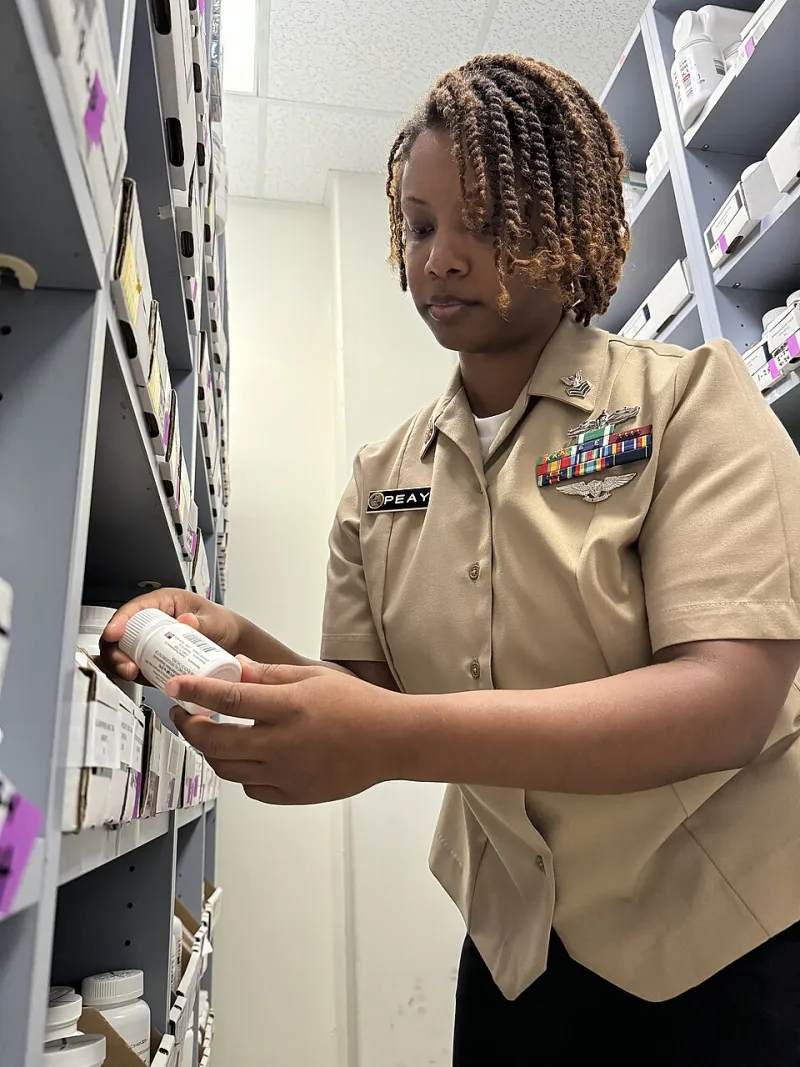
Photo: U.S. Navy NMRTC by Emily McCamy, Public domain, via Wikimedia Commons
The Medicine Cabinet You Think You Know
There is a quiet assumption embedded in the way most Americans approach their medicine cabinets. If a product is sold without a prescription—if it sits on a drugstore shelf next to chewing gum and reading glasses—it must be safe for anyone to use, anytime, alongside anything else they happen to be taking. This assumption is not only incorrect; in thousands of documented cases each year, it is genuinely dangerous.
The United States Food and Drug Administration estimates that adverse drug events account for more than one million emergency department visits annually. A significant proportion of those events involve interactions between over-the-counter (OTC) products and prescription medications. What makes this statistic particularly troubling is not the scale alone—it is the preventability. In most cases, a straightforward conversation with a licensed physician would have identified the risk before any harm occurred.
At TrueMedo, our network of board-certified physicians sees this pattern repeatedly: a patient manages a chronic condition with prescription medication, reaches for a common OTC remedy to address an unrelated symptom, and inadvertently sets off a chain of physiological events that neither they nor their pharmacist anticipated. The interaction was always there in the clinical literature. It simply never came up in conversation.
Why Patients Don't Mention What They're Taking
Research published in peer-reviewed journals consistently shows that patients underreport OTC medication and supplement use to their healthcare providers. The reasons are understandable, if not entirely logical.
First, there is the perception problem. Many patients categorize their prescription drugs as "real medicine" and everything else as incidental—vitamins, pain relievers, sleep aids, allergy tablets. These products feel more like groceries than pharmaceuticals. Disclosing them to a physician can feel unnecessary, even slightly embarrassing, as though one is wasting the doctor's time with trivial details.
Second, there is a structural gap in how healthcare encounters are designed. Appointment times are short. Physicians often focus on the presenting complaint or the management of a known condition. Unless a provider specifically asks about OTC use—and frames the question broadly enough to include supplements, herbal remedies, and vitamins—patients may not volunteer the information.
Third, direct-to-consumer advertising has normalized the idea that OTC products are universally compatible with other medications. The fine print on packaging, where interaction warnings do appear, is rarely read with the same attention a patient might give to a prescription insert.
The result is a significant information gap at precisely the moment when complete information matters most.
Common Combinations That Carry Real Risk
To understand the clinical stakes, consider a few interaction categories that appear with regularity in medical literature and in the practices of TrueMedo's licensed physicians.
Nonsteroidal anti-inflammatory drugs (NSAIDs) and blood thinners. Ibuprofen and naproxen are among the most widely used OTC medications in the country. They are also capable of amplifying the anticoagulant effects of warfarin and other blood-thinning medications, increasing the risk of serious bleeding. Patients prescribed anticoagulants for atrial fibrillation, deep vein thrombosis, or mechanical heart valves may not realize that reaching for ibuprofen after a headache could destabilize their carefully managed clotting parameters.
Antihistamines and central nervous system depressants. First-generation antihistamines—found in many allergy medications and over-the-counter sleep aids—carry sedative properties that compound the effects of prescription medications including benzodiazepines, opioid analgesics, and certain antidepressants. The resulting central nervous system depression can impair cognition, coordination, and respiratory function, particularly in older adults.
St. John's Wort and a broad range of prescriptions. This widely available herbal supplement, taken by many Americans for mild depression or mood support, is a potent inducer of cytochrome P450 enzymes in the liver. In practical terms, this means it accelerates the metabolism of numerous prescription drugs—including oral contraceptives, HIV antiretrovirals, immunosuppressants, and certain psychiatric medications—reducing their effectiveness to potentially dangerous levels. Organ transplant recipients on immunosuppressive therapy who begin taking St. John's Wort have experienced acute rejection episodes as a direct consequence.
Antacids and certain antibiotics or thyroid medications. Calcium carbonate antacids, sold under dozens of familiar brand names, can bind to certain antibiotics and to levothyroxine (a thyroid hormone replacement prescribed to millions of Americans), significantly reducing their absorption. A patient taking levothyroxine for hypothyroidism who also uses an antacid for acid reflux may find their thyroid levels drifting out of range for reasons that seem inexplicable until the interaction is identified.
Decongestants and blood pressure medications. Pseudoephedrine and phenylephrine, common ingredients in cold and sinus medications, raise blood pressure by constricting blood vessels. For patients whose hypertension is being managed with prescription antihypertensives, these OTC decongestants can partially counteract the medication's effect and push blood pressure into a hazardous range.
The Structural Solution: A Complete Medication Review
The interactions described above are not obscure pharmacological curiosities. They are documented, clinically significant, and—crucially—detectable through a thorough medication review conducted by a licensed physician.
This is precisely the kind of review that TrueMedo's platform is designed to facilitate. When a patient consults with one of our physicians, they are not engaging with an algorithm or a symptom-checker. They are speaking with a licensed medical professional who is trained to ask the right questions, including the ones patients would not think to answer unprompted: What vitamins do you take? Do you use any herbal supplements? Have you taken anything for pain, sleep, or allergies in the past month?
A complete medication reconciliation—one that accounts for every prescription drug, every OTC product, and every supplement a patient uses—creates a full picture that neither the patient's primary care physician nor their pharmacist may have individually. Pharmacists are invaluable resources and are often the first line of defense against interactions at the point of dispensing. However, they can only flag interactions involving the medications they can see. A supplement purchased at a health food store or a pain reliever grabbed at a convenience store may never enter that picture.
Digital health platforms that connect patients with licensed physicians can bridge this gap systematically. A physician who reviews a patient's complete medication list—across all sources—can identify potential interactions, recommend safer alternatives, and coordinate with the patient's other providers to ensure that the full clinical picture is shared.
What Patients Can Do Right Now
Before your next medical consultation, take fifteen minutes to compile a complete list of everything you ingest for health purposes: every prescription medication, every OTC drug, every vitamin, every supplement, and every herbal product. Include dosages and how frequently you use each one. Bring this list—or share it digitally—with your physician.
If you are considering adding any new product to your routine, including something as seemingly benign as a multivitamin or a melatonin supplement, consult with a licensed physician first. The question is not whether the product is safe in isolation. The question is whether it is safe in combination with everything else you are already taking.
The medicine cabinet that feels familiar and harmless contains real pharmacological agents. They deserve the same clinical scrutiny as any prescription. A licensed physician—the kind you can access through a platform like TrueMedo—is the professional best equipped to provide it.